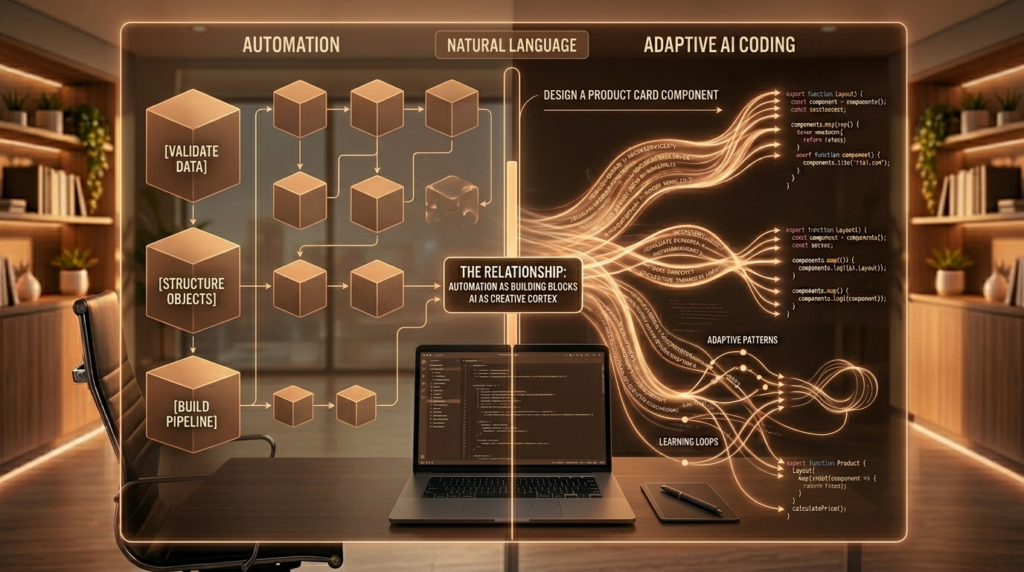

In recent years, one of the trends in software development that has come to the forefront around the world is vibe coding. It has emerged as a powerful method to build software systems by clearly describing the intent, experiences in natural language, and letting AI take care of most of the implementation process.
From the surface, this may look like a radically new way of developing software applications. This diverges in a major way from traditional software development methodologies. Vibe coding aligns meticulously with design thinking. It is revealed in a deeper way, which is a human-centric framework prioritizing iterative learning, empathy, and lucidity. When put together, design thinking offers direction and meaning, while vibe coding facilitates effective execution.
The inherent alignment between design thinking and vibe coding
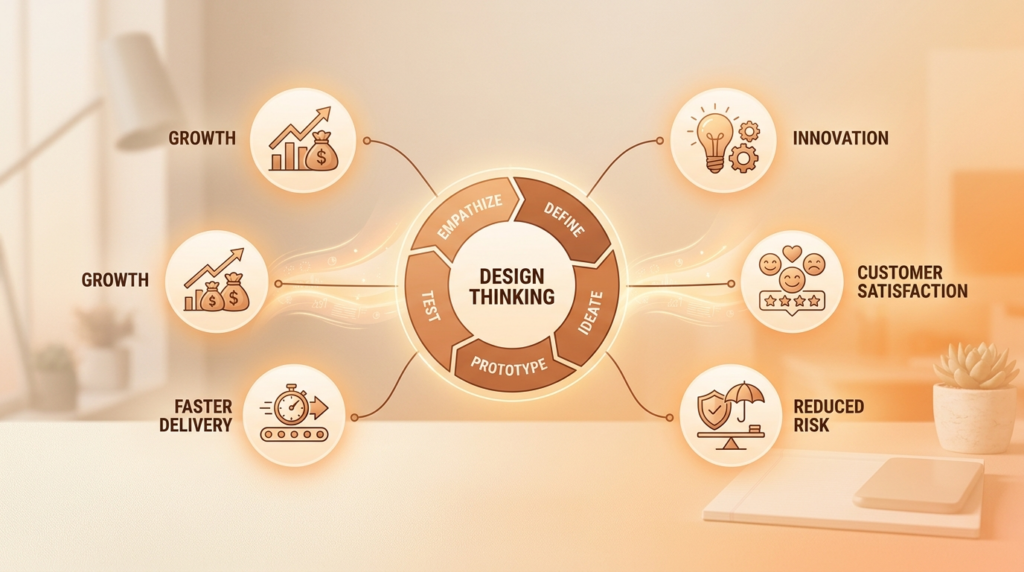
Both design thinking and vibe coding remove the focus from old-fashioned and rigid processes and steer it toward experience, intent, and iteration. Design thinking prioritizes understanding human beings as users and problems before offering solutions. Vibe coding, on the other hand, gets rid of technical frictions to help creators focus on the things that they want to build instead of spending time figuring out how to build it.
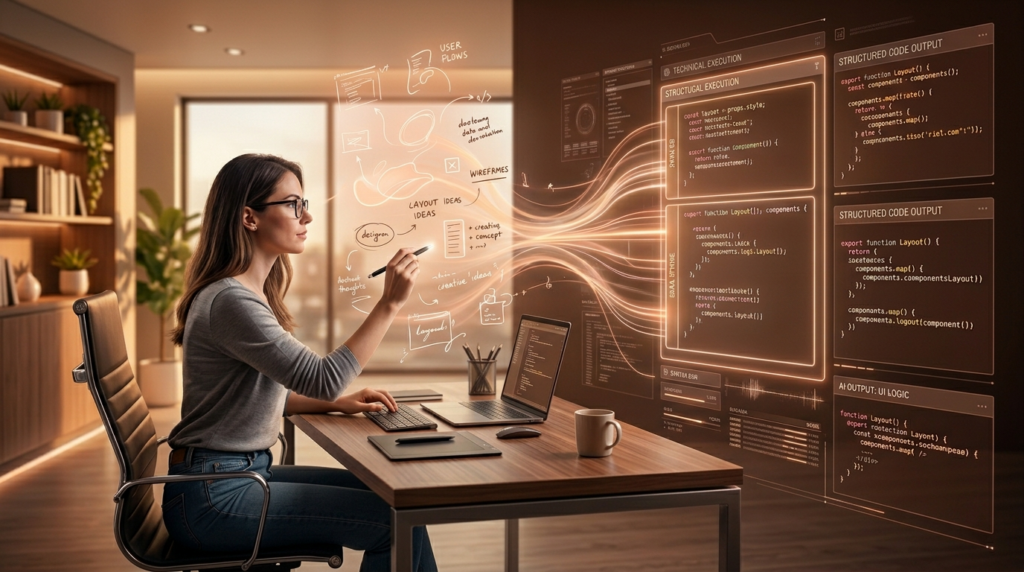
Let’s now explore how the various phases of design thinking can connect to the vibe coding workflow.
Empathizing Phase → Defining the Problem in Vibe Coding
Design thinking starts with compassion. This is where it becomes substantial to deeply understand the users, their necessities, pain points, and motivations. Such factors can then be deciphered perfectly into the problem-first approach inherent in vibe coding.
Before sending an AI prompt, the developer needs to be clear about the following:
- The users
- The problems that they are facing
- The kind of experiential or emotional outcome one is looking for
Unless there is a proper understanding of these above-mentioned facts, the AI code that is generated might prove to be functional, but it is still misaligned. Proper empathy helps to make sure that vibe coding does not simply translate into random experimentation. It should be able to generate codes that are both relevant and meaningful.
Define Phase → Clear Conceptualization
The next stage is the “Define” phase of design thinking. In this phase, it becomes important to articulate the issue clearly and set proper boundaries. Within the sphere of vibe coding, it becomes an effective conceptualization of the requirement before prompting. Having a precise idea of the desired final product makes it easier to make the most of AI collaboration.
This phase allows developers to articulate:
- A specific problem statement
- Success criteria
- Essential user requirements
By having well-defined concepts, it becomes easier to come up with sharper prompts that generate more relevant outputs, so that iteration can be made faster.
Ideate Phase → Natural Language Prompting
Ideation is the phase where design thinking enables brainstorming several possible solutions without thinking about practical feasibility at the beginning stages. Vibe coding renders this path much simpler for the coding team. Developers can:
- Describe the features in plain language.
- Explore various user flows conversationally.
- Generate numerous approaches using iterative prompts.
In this way, AI serves as a creative collaborator in any workspace. It empowers the crew to realize all kinds of ideas swiftly and smoothly.